

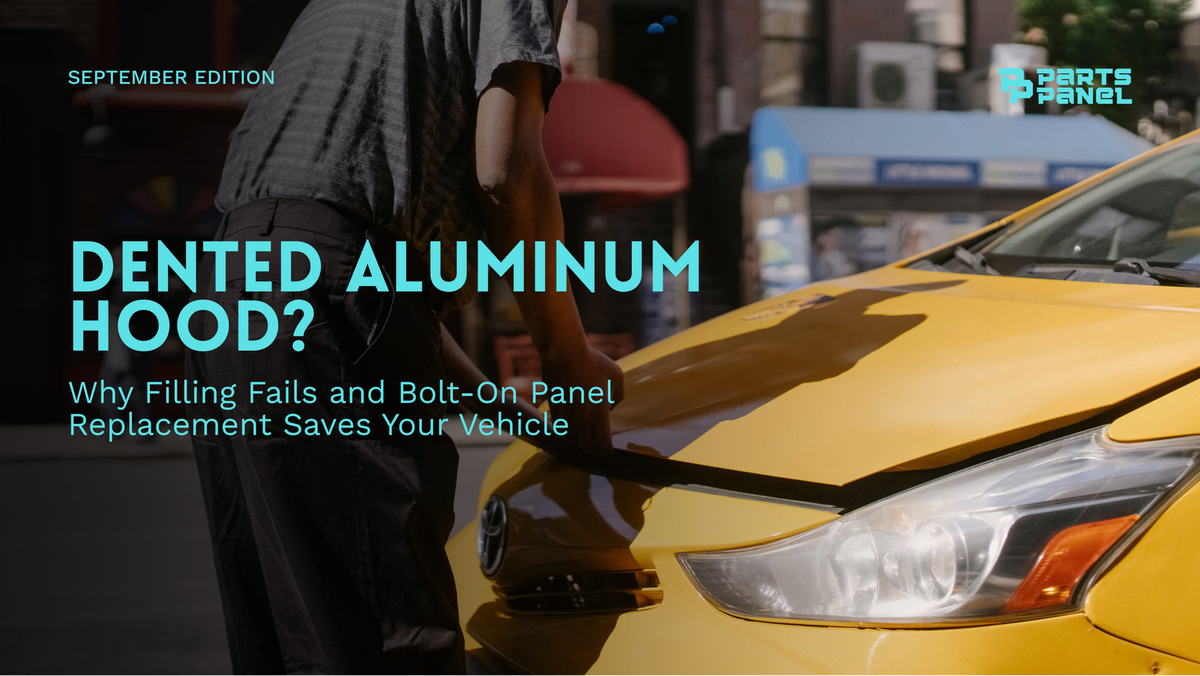
That sudden hail storm or front-end fender bender left your hood creased, but your truck or SUV still runs like a dream. Your first instinct might be pulling into a body shop for a quick stud-weld pull and a thick layer of body filler.
On older steel vehicles, traditional panel repair works great. But if your ride was built in the last decade, high-density aluminum body panels change the rules completely. Trying to skim-fill or hammer out a dented aluminum hood usually leads to cracked paint, structural fatigue and inflated labor bills. Here is why panel replacement beats panel repair every single time.
The Metallurgical Reality: Aluminum vs. Traditional Steel
Automakers rely heavily on aluminum alloys to shed weight and boost fuel efficiency. While great for performance, aluminum behaves radically differently under stress compared to structural sheet steel.
1. Work Hardening and Metal Fatigue
Steel possesses a "shape memory" that allows skilled technicians to pull and massage dents back into alignment. Aluminum lacks this elasticity. When aluminum bends during an impact, it instantly work hardens. Attempting to pull the dent back out weakens the metal grain structure, causing stress fractures or complete panel tears.
2. High Thermal Conductivity
Conventional dent repair relies on localized torch heat to shrink stretched metal. Aluminum dissipates heat rapidly across the entire panel. To reshape it, technicians must apply extreme heat, which ruins the structural temper of the metal alloy and destroys internal anti-vibration adhesive bonds.
3. Bond Failure and Filler Delamination
Body filler expands and contracts at a vastly different rate than aluminum during seasonal temperature shifts. Because aluminum panels flex considerably under highway wind loads, heavy body filler eventually cracks, pops loose and lets moisture ruin your undercoat.
3-Point Decision Checklist: Repair or Replace?
Run through this quick checklist before approving a costly body shop quote:
-
Is the damage on a main body crease or body line?
- Fact: Aluminum cannot be cleanly pulled along stamped body lines without cracking the panel. Replacement is mandatory.
-
Is the shop quoting over 4 hours of aluminum body labor?
- Fact: Specialty aluminum labor rates often exceed $120/hr. Buying a clean, direct-fit replacement panel is almost always cheaper than paying for labor hours.
-
Do you want to protect your vehicle’s resale value?
- Fact: Factory VIN-tracked bolt-on panels retain original structural integrity, whereas heavily filled hoods fail inspection and lower trade-in value.
Get Factory Fitment Without the Dealership Markup at Parts Panel
Instead of gambling on expensive metalwork and unstable body filler, swap your damaged hood with a direct-fit bolt-on replacement.
At Parts Panel, we take the guesswork out of auto salvage. We specialize in late-model truck, SUV and car components, offering Grade A recycled OEM panels alongside premium aftermarket options. Every panel in our inventory is digitized with high-resolution photos, exact color code verification and full VIN tracking, guaranteeing exact fitment right out of the crate with zero rust or structural fatigue.


