

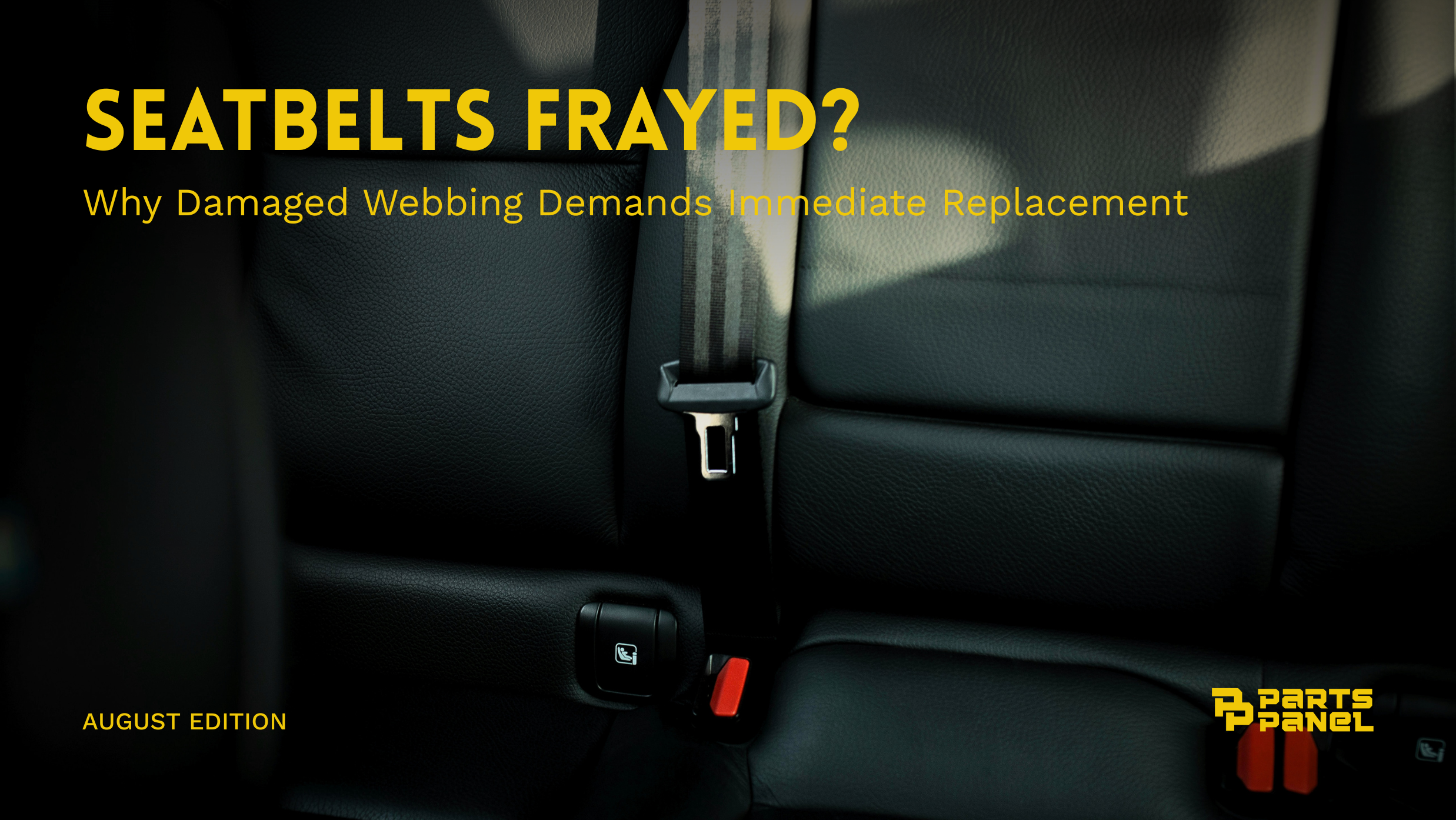
You pull your seatbelt across your chest, only to notice a fuzzy, unraveling edge on the strap or worse, it catches and jams inside the retractor. It’s easy to shrug off a little wear as cosmetic, but seatbelts are engineered safety systems designed around tensile strength.
Even minor webbing damage compromises the system's ability to hold you in place during a collision. Knowing when to replace your seatbelt assembly is critical for keeping your cabin safe.
The Engineering Behind Seatbelt Webbing: Why Minor Fraying Matters
Seatbelts aren't simple fabric straps. They are woven from high-tensile polyester fibers using a specialized pattern designed to handle thousands of pounds of force.
During a sudden stop or impact, the pretensioner fires, locking the belt tight and transferring immense load onto the webbing. When that webbing is compromised, catastrophic failure can occur:
- Tensile Strength Loss: A single nick, tear or severe fray can reduce a seatbelt's load-bearing capacity by up to 50%.
- Retractor Jamming: Frayed edges expand the thickness of the belt. As the strap retracts, loose threads jam the internal spool mechanism, leaving the belt stuck or sagging.
- Chemical Degradation: Spilled coffee, harsh interior cleaners and intense UV rays break down the synthetic fibers over time, making them brittle even if they look intact.
4-Point Safety Checklist: Is It Time to Replace Your Belt?
Inspect your seatbelts regularly using this simple diagnostic check:
- The Edge-Fray Test: Run your hand along the entire length of the extended belt. Any tearing, missing weave or fuzzy fraying over 1/8th of an inch requires immediate replacement.
- The Latch & Retract Test: Pull the belt out completely. Does it retract smoothly without binding? If it hesitates or requires manual pushing, the internal mechanism or swollen webbing is failing.
- The Lock-Up Check: Give the belt a sharp, quick tug. If the retractor fails to lock instantly, the internal inertia locks are damaged.
- Post-Collision Inspection: If the vehicle was in a minor accident where the pretensioners activated, the belt stretching limits have been reached and the assembly must be replaced.
The Fix: Why Grade A Recycled OEM Seatbelts Beat Dealership Prices
When replacing a seatbelt, aftermarket universal belts rarely fit properly and buying a brand-new assembly from a dealership can easily run $400 to $700 per side.
The smartest repair path is a Grade A recycled OEM seatbelt assembly. You get factory-original fitment, exact color-matched webbing and built-in tensioner functionality, all at a fraction of the cost of new dealership inventory.
Protect Your Cabin Safety
A frayed or jammed seatbelt isn't something to put off. Replacing compromised safety gear ensures your vehicle protects you and your passengers the way the manufacturer intended.
Because seatbelts are critical safety components that often require specific trim matching, color coding and verified pretensioner integrity, sourcing the right replacement can be tricky. Even though seatbelts aren't currently part of our catalog, our team at Parts Panel is always looking out for your safety, vehicle longevity and repair experience.
Whether you need advice on sourcing hard-to-find components or are looking for other high-value OEM electronic and body upgrades, we’re here to help you repair smarter. Have questions about sourcing parts safely? Check out our latest guides and resources on Parts Panel to stay informed on your next repair project.


