

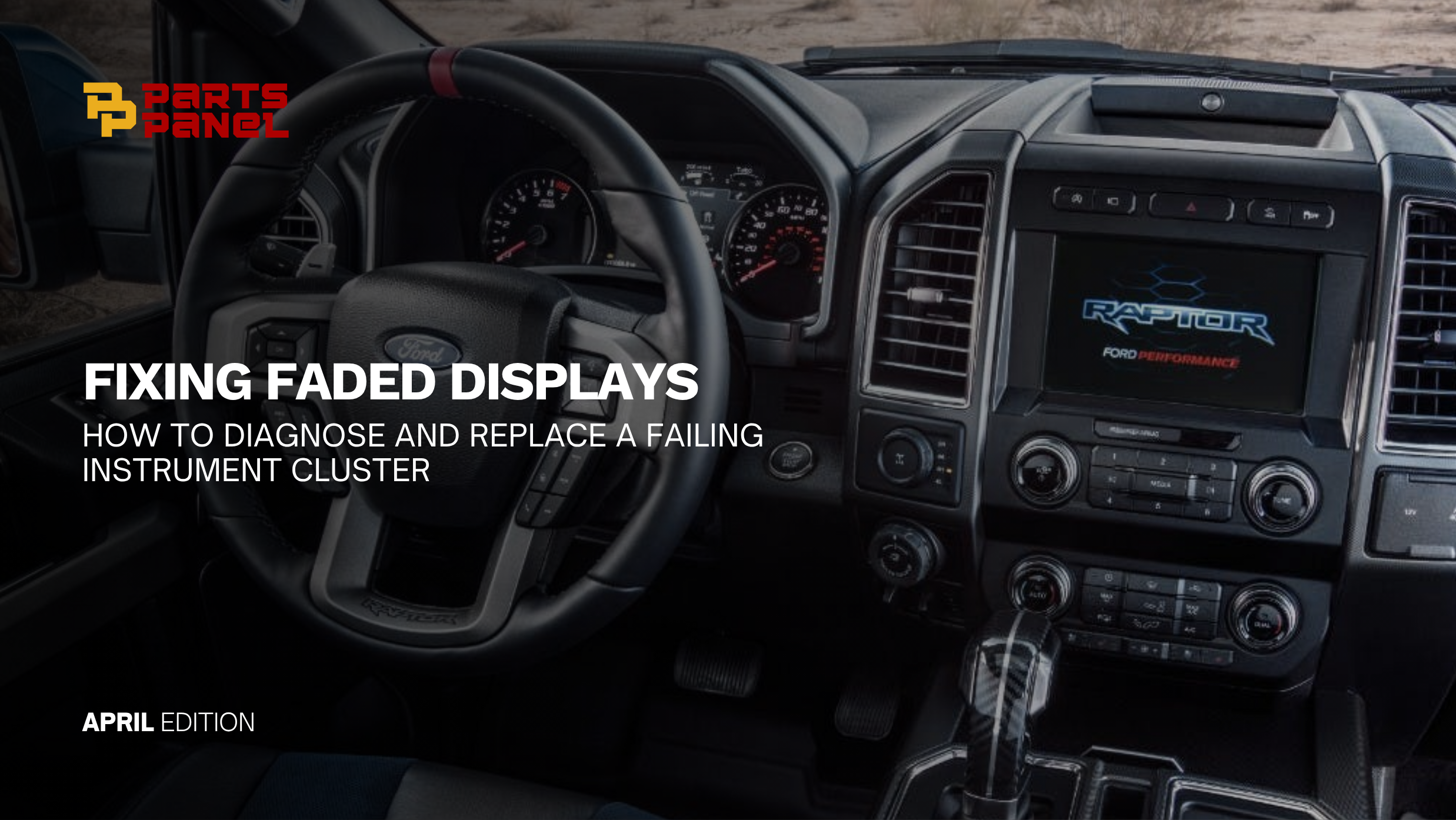
Modern dashboards are no longer just simple mechanical gauges hooked up to a spinning cable. They are complex digital communication nodes, integrating infotainment data, advanced driver-assistance systems (ADAS) warnings and immobilizer security networks. When they start to glitch, you need to know whether you are dealing with a simple electrical gremlin or a permanent hardware failure.
Here is a breakdown of what goes wrong behind the glass, how to diagnose the symptoms, and when it is time to source a replacement.
Why Instrument Clusters Fail
Your vehicle's instrument cluster operates in a surprisingly harsh environment. It is subjected to extreme temperature swings, constant dashboard vibration and years of continuous electrical load. Over a 5-to-10-year lifespan, these factors heavily degrade the internal components.
The most common failure points include:
- Stepper Motors: These tiny electric motors physically move your gauge needles. When their internal plastic gears strip, your RPM or speed needles will stick, stutter or drop to zero.
- LCD Ribbon Cables: The flexible cables connecting the digital information screens to the motherboard weaken over time. Heat cycles cause the adhesive to lift, resulting in missing lines or "dead" pixel blocks.
- Backlight Inverters and LEDs: Soldered surface-mount LEDs and their power inverters eventually burn out, leading to uneven lighting or complete blackout conditions.
- Cracked Solder Joints: Constant road vibration inevitably weakens the micro-solder connections on the main printed circuit board (PCB), causing intermittent power loss or warning light malfunctions.
The Diagnostic Checklist: Repair or Replace?
Before you rip the dashboard apart, use this checklist to isolate the problem.
1. The Screen is Dim or Flickering
First, check your interior dimmer switch. If the dial is set correctly, test your battery and alternator output. A failing voltage regulator can cause dashboard lights to pulse. If the electrical system is charging at a steady 13.5 to 14.5 volts, the cluster's internal lighting circuit has failed.
2. Gauges Are Stuck or Reading Incorrectly
If your speedometer says you are doing 80 km/h while you are parked, you likely have a blown stepper motor. While individual motors can sometimes be de-soldered and replaced, this requires specialized bench tools and micro-soldering experience. For most shops and DIYers, swapping the entire unit is the most cost-effective route.
3. Total Communication Failure
If the cluster is entirely dead but the car still starts, check the dedicated fuses in the kick panel. If the fuses are intact, the cluster's main processor has likely failed and requires an immediate swap.
Sourcing a Replacement: Avoiding the Wrecking Yard Chaos
Replacing a modern instrument cluster is not as simple as grabbing the first one you see. Many clusters are hard-coded to the vehicle's Immobilizer System and the Controller Area Network (CAN bus). If the part numbers do not match exactly, the car may refuse to start, or you will be locked out by a security anti-theft code.
This is where traditional salvage yards fall short. Digging through a disorganized lot only to pull a gauge cluster with sun-baked plastic and unknown internal damage is a gamble you cannot afford to take.
Parts Panel eliminates this friction. We treat recycled auto parts with retail-grade precision. Through our modern modular recycling process, we provide exact VIN matching and track the OEM serial numbers of every module we process to guarantee compatibility.
When you browse our inventory, you get total digital transparency. Every Grade A recycled cluster is cataloged with high-fidelity photos, meaning you see the exact condition of the mounting tabs and the lens before you buy. Whether you are an independent collision shop needing a fast, reliable fit or a DIY prosumer tackling a weekend fix, our logistics ensure you get a guaranteed, exact-match part without the guesswork.
Summary
A fading, glitching or dead instrument cluster compromises your driving safety and vehicle functionality. While minor fuse issues are a quick fix, failing stepper motors, burnt LCD ribbons and degraded solder joints almost always necessitate a full hardware swap. Sourcing a guaranteed, VIN-matched replacement ensures your dashboard functions exactly as the manufacturer intended.
Ready to restore your dashboard? Stop guessing with legacy wreckers. Search our verified, high-fidelity catalog at Parts Panel to find the exact-fit instrument cluster for your vehicle today.


